
Homeowners in Newark, New Jersey, face a pivotal decision when it comes time to sell: navigate the traditional real estate market or opt for a direct cash offer. Essex County presents a unique real estate landscape, characterized by historic properties, a high concentration of multi-family homes, and specific municipal regulations. Whether you own a classic brick rowhouse in the Ironbound, a historic single-family home in Forest Hill, or a two-family investment property in Vailsburg, choosing the right sales method is critical to maximizing your net proceeds and minimizing your stress.
Selling a house is rarely as simple as putting a sign in the yard. In New Jersey, the process involves navigating a mandatory attorney review period, coordinating municipal inspections, and calculating complex closing costs, including state transfer fees and high local property taxes. For some sellers, the traditional listing route offers the chance to test the open market. For others, the speed, certainty, and convenience of a cash offer provide a superior solution. This guide will break down the differences between a traditional listing and a cash sale in Newark, helping you make an informed decision based on your unique circumstances.
The Newark, New Jersey Real Estate Landscape
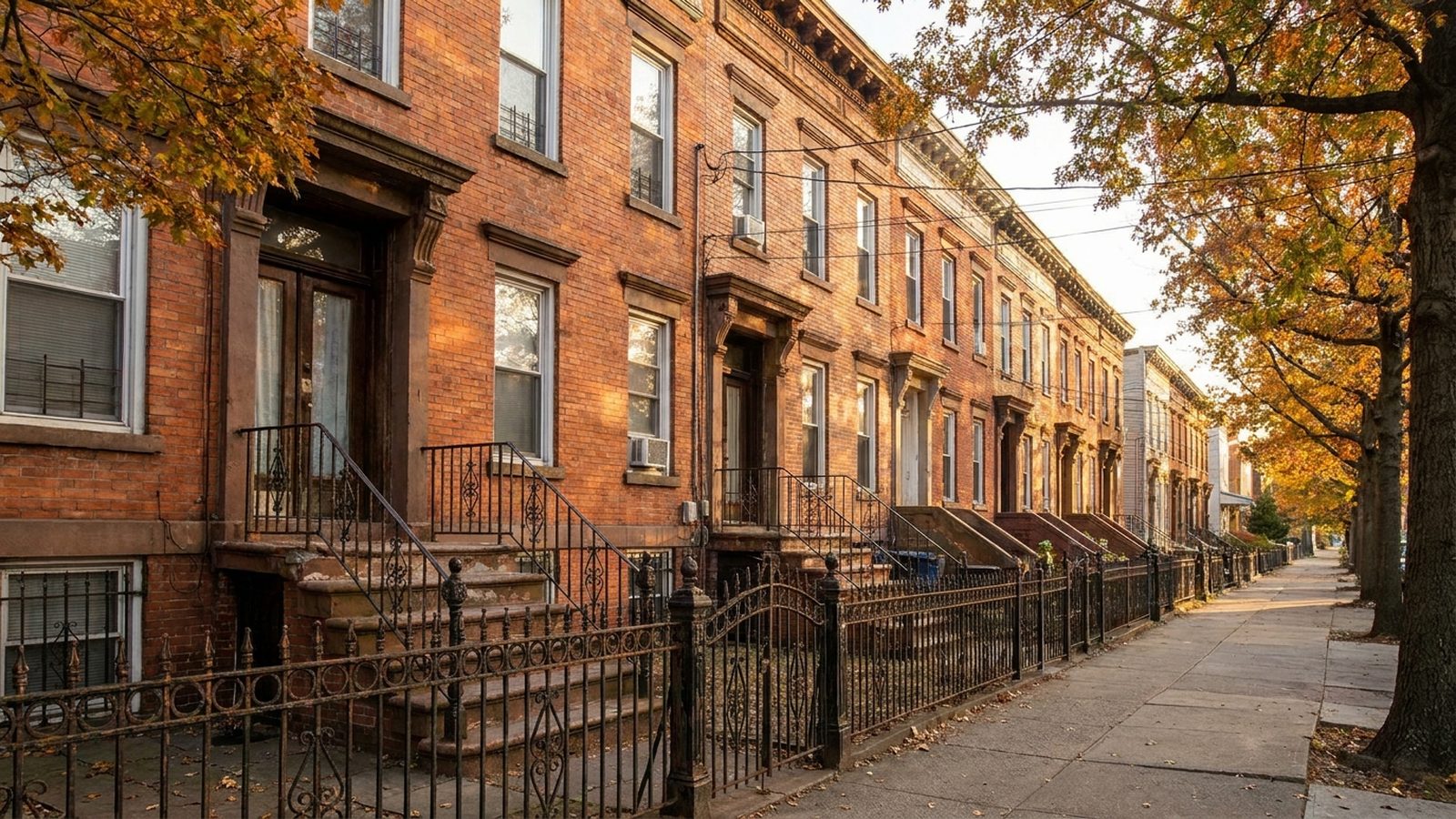
To understand your selling options, you must first understand the local market dynamics. Newark is New Jersey's largest city, and its housing stock is incredibly diverse. The city is renowned for its multi-family properties—duplexes, triplexes, and larger apartment buildings—which make up a significant portion of the residential real estate. Neighborhoods like the Ironbound are densely packed with these multi-unit buildings, often situated on tight lots that leave little room for off-street parking or extensive landscaping.
Conversely, areas like Forest Hill boast sprawling, historic single-family homes with intricate architectural details, while neighborhoods such as Weequahic offer a mix of mid-century suburban-style homes and multi-family units. Because much of Newark's housing stock was built decades—or even over a century—ago, deferred maintenance is a common issue. Aging roofs, outdated plumbing, and older electrical panels can create significant hurdles during a traditional sale, as retail buyers typically rely on mortgage financing that requires the home to meet strict appraisal and safety standards.
Furthermore, Essex County is known for having some of the highest property tax rates in the nation. Every month your property sits on the market waiting for a buyer, you are responsible for those hefty tax bills, along with utilities, insurance, and routine maintenance. This carrying cost is a crucial factor when weighing a fast cash sale against a potentially drawn-out traditional listing.
How Traditional Home Sales Work in Newark
Listing your home traditionally involves hiring a real estate agent, preparing the property for public showings, and waiting for the right buyer. In Newark, this process comes with specific local and state requirements that can complicate the timeline.
One of the most significant hurdles is the municipal inspection. Before you can close on a traditional sale, you must typically obtain a Certificate of Occupancy (C of O) or a certificate of smoke detector and carbon monoxide alarm compliance from the City of Newark. This requires scheduling an inspection with city officials. If your home has unpermitted work, illegal basement apartments (a common issue in Newark's multi-family homes), or safety violations, you will be required to remediate these issues before the city issues the certificate. This can lead to unexpected repair costs and significant delays.
Additionally, traditional sales in New Jersey are subject to a unique legal process known as the attorney review period. Once a buyer and seller sign a standard real estate contract prepared by a real estate agent, a three-business-day attorney review period begins. During this time, either party's attorney can review, modify, or completely cancel the contract without penalty. This period can be nerve-wracking for sellers, as a seemingly solid deal can fall apart before it even truly begins. Once attorney review concludes, the buyer will conduct their own private inspections, which often lead to further negotiations for repairs or seller concessions.
The Timeline: Step-by-Step Listing vs. Cash Offer in Essex County
Time is money, especially when dealing with Essex County property taxes. Understanding the timeline of each selling method is essential for planning your next move. If you are debating the two paths, you should read our comprehensive guide on Cash Home Buyers vs. Traditional Sale: Which Is Right for You?
The Traditional Listing Timeline
A traditional sale is a multi-step process that often takes several months from start to finish:
- Preparation (Weeks 1-4): Decluttering, deep cleaning, painting, and making minor repairs to boost curb appeal.
- Listing and Showings (Weeks 4-10): Staging the home, professional photography, open houses, and accommodating daily showing requests.
- Negotiation and Attorney Review (Weeks 10-12): Reviewing offers, signing a contract, and navigating the three-business-day New Jersey attorney review period.
- Inspections and Appraisals (Weeks 12-16): The buyer conducts inspections, the municipality conducts its C of O inspection, and the buyer's lender orders an appraisal. If the appraisal comes in low or inspections reveal issues, negotiations reopen.
- Closing (Weeks 16-20): Waiting for the buyer's mortgage to be fully underwritten and cleared to close.
The Cash Offer Timeline
Selling to a cash buyer significantly condenses the timeline by eliminating lenders, appraisals, and public showings:
- Initial Contact (Day 1): You reach out to a cash buyer and provide basic details about your Newark property.
- Property Walkthrough and Offer (Days 2-4): The buyer visits the property to assess its condition and presents a firm, no-obligation cash offer.
- Contract and Title Search (Days 5-14): Once you accept, the contract goes straight to a title company to ensure there are no hidden liens or encumbrances.
- Closing (Days 14-21): You choose the closing date. Because there is no mortgage underwriting or required municipal repair bottleneck (cash buyers purchase as-is), the sale can close in a matter of weeks.
Get a Cash Offer for Your Newark Home
No repairs, no fees, no hassle. Close in as little as 7 days.
Get My Free Offer →Crunching the Numbers: Costs to Sell a House in Newark
When comparing a traditional listing to a cash offer, it is crucial to focus on net proceeds—the actual amount of money you walk away with—rather than just the top-line offer price. A high offer on the open market can be quickly whittled down by fees, commissions, and closing costs.
If you list traditionally, you are typically responsible for paying real estate agent commissions, which generally cover both your agent and the buyer's agent. You must also factor in the cost of staging, professional photography, and any repairs required by the buyer or the city inspector.
Regardless of how you sell, New Jersey imposes a Realty Transfer Fee on the sale of real estate. This fee is calculated based on the sales price and is typically paid by the seller at closing. You can find detailed information on how this fee is structured through the New Jersey Division of Taxation. Additionally, because New Jersey is an attorney-closing state, you will need to budget for real estate attorney fees to represent your interests during the transaction.
Another critical cost to consider is the proration of your Essex County property taxes. At closing, taxes are prorated based on the exact day of the sale. If your traditional listing takes four months longer to close than a cash sale, you are responsible for four additional months of high Essex County taxes, plus utilities, insurance, and mortgage interest. When you add up commissions, transfer fees, holding costs, and repair bills, the gap between a traditional offer and a cash offer often narrows significantly. For a deeper dive into how cash offers are calculated, check out our guide on How Much Do Cash Home Buyers Pay? What to Expect in 2026.
Capital Gains Tax Exclusion
If you have owned and used your home as your main residence for at least two of the five years preceding the sale, you may be able to exclude up to $250,000 of the gain from your income (or up to $500,000 if married filing jointly). Source: IRS Topic 701
Selling Multi-Family Homes in Newark
Newark's real estate market is heavily defined by its 2-3 family homes. Selling a multi-family property introduces a unique set of challenges, primarily revolving around tenants. If you are listing a multi-family home traditionally, retail buyers often want the property delivered vacant so they can move in themselves or set their own rental rates with new tenants.
Delivering a vacant property in New Jersey can be incredibly difficult. New Jersey has strict tenant protection laws, and evicting a tenant simply because you want to sell the building is generally not permitted unless the buyer intends to personally occupy the unit. This means you may have to negotiate a "cash for keys" buyout with your tenants, which can cost thousands of dollars out of pocket. Furthermore, coordinating showings with multiple sets of tenants can lead to friction, messy open houses, and uncooperative occupants who may actively discourage potential buyers.
This is where cash home buyers in Newark provide a distinct advantage. Companies like USHomeBuyers.com frequently purchase multi-family properties with existing tenants in place. You do not have to worry about lease buyouts, coordinating showings with angry renters, or navigating complex eviction laws. The cash buyer assumes the existing leases and takes over property management immediately upon closing, allowing you to walk away from a stressful landlord situation without the traditional hassle.
What to Watch Out For: Vetting Cash Buyers
While selling for cash offers speed and convenience, it is vital to ensure you are working with a reputable buyer. The real estate industry has its share of bad actors, and knowing how to vet a cash buyer will protect your equity and ensure a smooth transaction. You can learn more about protecting yourself in our article, Are We Buy Houses Companies Legit? How to Spot Scams.
First, always ask for proof of funds. A legitimate cash buyer should be able to provide a recent bank statement or a letter from their financial institution demonstrating they have the liquid capital to close the deal. Beware of buyers who use high-pressure sales tactics or demand upfront fees before making an offer; a genuine cash buyer will never ask you to pay them to buy your house.
Second, ensure the transaction is handled through a licensed New Jersey title company and a qualified real estate attorney. All earnest money deposits should be held in a secure escrow account, never given directly to the buyer or seller before closing. For general guidance on the closing process, escrow, and protecting your financial interests, the CFPB offers excellent resources for homeowners.
At USHomeBuyers.com, we pride ourselves on transparency. We operate in markets across the country, including New Jersey, and we walk our clients through every step of the net proceeds math. We encourage sellers to consult with their attorneys during the process to ensure they feel completely confident in their decision.
Newark Home Seller Checklist
- Locate your original deed and current mortgage payoff statement.
- Review any existing tenant leases and security deposit records if selling a multi-family home.
- Consult a New Jersey real estate attorney to understand your rights during the attorney review period.
- Calculate your estimated holding costs (Essex County taxes, utilities, insurance) for a 3-6 month traditional listing period.
- Determine if your property has any unpermitted additions or outstanding municipal violations.
- Request a no-obligation cash offer to establish a baseline for your property's as-is value.
Making the Right Choice for Your Newark Property
There is no one-size-fits-all answer when it comes to selling a house in Newark. If your property is in pristine condition, fully updated, vacant, and you have the time and financial flexibility to wait out the traditional market, listing with an agent might yield the highest gross sale price. However, if you are dealing with an older home needing repairs, navigating difficult tenant situations in a multi-family property, or simply want to avoid the delays of municipal inspections and the uncertainty of the New Jersey attorney review period, a cash sale is often the superior choice.
By understanding the true costs of selling—including the New Jersey Realty Transfer Fee, agent commissions, and ongoing Essex County property taxes—you can accurately compare your options. If you value speed, certainty, and a hassle-free process, selling as-is to a reputable cash buyer allows you to close on your timeline and move forward with your life.
Ready to see what your home is worth without the hassle of repairs or showings? You can request a no-obligation cash offer from USHomeBuyers.com today and discover the easiest way to sell your Newark property.
This article is general information, not legal, tax or financial advice. Rules change, so confirm details with a licensed professional in New Jersey.
Frequently Asked Questions
Do I need a Certificate of Occupancy to sell my house in Newark?
Yes, traditional sales typically require a Certificate of Occupancy or a smoke detector and carbon monoxide compliance certificate from the municipality before closing. If you sell to a cash buyer who purchases the property as-is, they often assume the responsibility for obtaining necessary permits after closing.
What is the New Jersey attorney review period?
In New Jersey, traditional real estate contracts prepared by real estate agents are subject to a three-business-day attorney review period. During this time, either the buyer's or seller's attorney can disapprove the contract or propose modifications, and either party can cancel the agreement without penalty.
How does selling a multi-family home differ from a single-family home in Newark?
Multi-family homes often involve existing leases and tenants. Traditional buyers usually prefer vacant properties to move in or set their own rental rates, which may require you to navigate tenant relocations. Cash buyers frequently purchase properties with tenants in place, simplifying the process.
Will I have to pay the New Jersey Realty Transfer Fee if I sell for cash?
Yes, the New Jersey Realty Transfer Fee applies to most property sales, whether you sell through a traditional listing or to a cash buyer. However, selling for cash eliminates other traditional costs, such as real estate agent commissions and staging expenses.
Sources & Further Reading
- IRS Topic 701: Sale of your home
- New Jersey Division of Taxation
- New Jersey Department of Community Affairs
- City of Newark
- CFPB: Owning a Home