
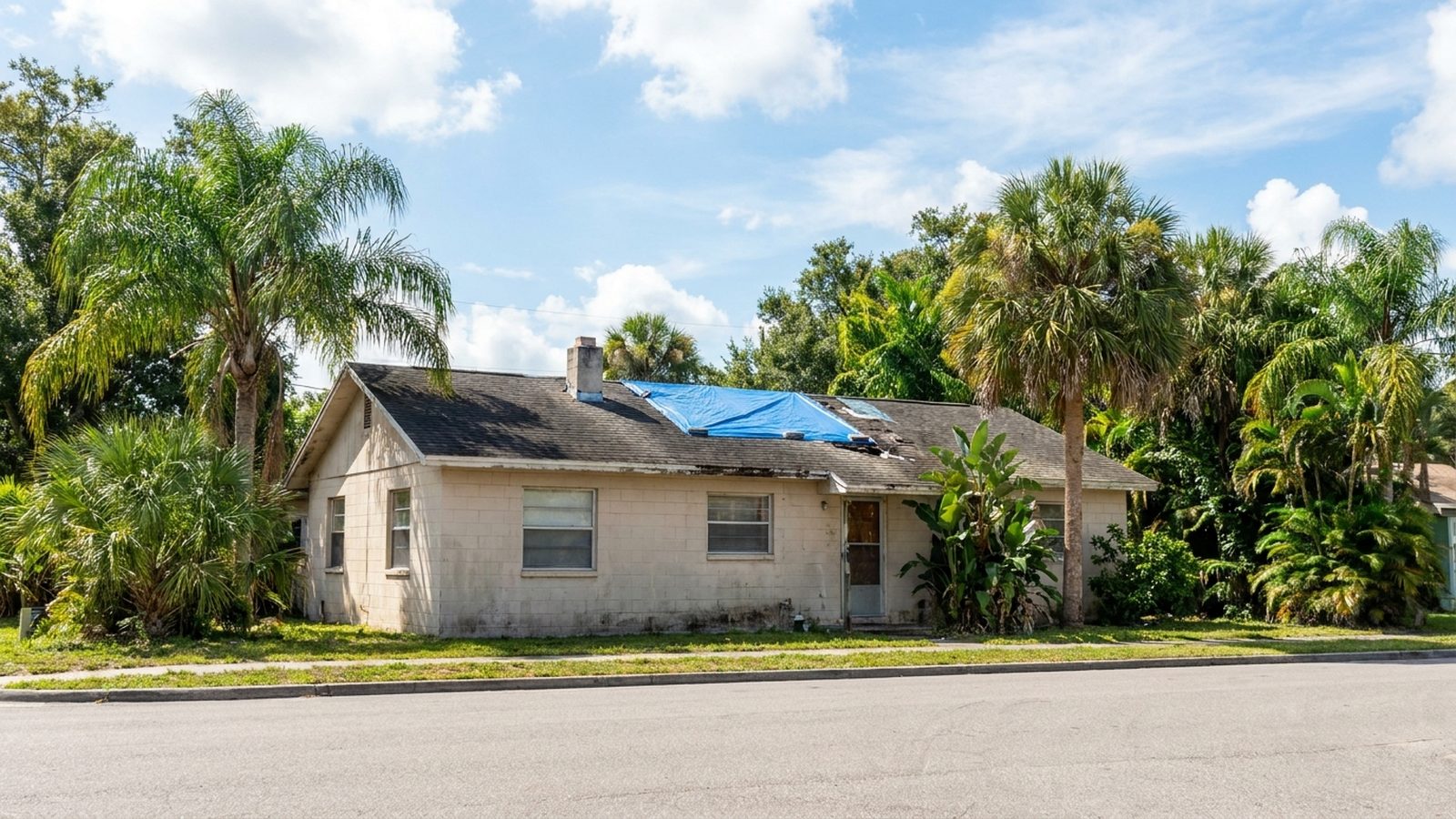
Selling a home in the Tampa Bay area can be a highly rewarding financial move, but when your property is suffering from a damaged, leaking, or severely aging roof, the process quickly becomes complicated. In Florida's unique real estate climate, the roof is arguably the most scrutinized component of any residential property. Between severe tropical weather, rigorous building codes in Hillsborough County, and an increasingly strict property insurance market, a compromised roof can bring a traditional home sale to a grinding halt.
Homeowners facing this situation typically have three paths forward: invest heavily in repairing the damage, completely replace the roof before listing, or sell the property strictly as-is. Making the right choice requires a clear understanding of local market dynamics, buyer financing requirements, and your legal disclosure obligations as a Florida seller. This guide breaks down exactly what you need to know to navigate a successful sale.
The Florida Insurance Market and Tampa Roof Requirements
To understand why selling a house with roof damage in Tampa is so challenging, you first have to understand the current state of Florida's property insurance market. Insurance carriers operating in the Sunshine State have become incredibly risk-averse, particularly concerning wind mitigation and roof integrity. For a buyer to secure a traditional mortgage, their lender will require them to bind a comprehensive homeowner's insurance policy before closing.
When a home goes under contract, the buyer's insurance company will typically require a four-point inspection, which closely examines the roof, HVAC, electrical, and plumbing systems. If the inspector notes that the roof has active leaks, missing shingles, extensive granule loss, or has simply exceeded its expected useful life, the insurance carrier will likely deny coverage. Without insurance, the buyer's lender will refuse to fund the loan, causing the transaction to collapse.
This dynamic means that a damaged roof isn't just an aesthetic issue or a minor negotiating point—it is often a fatal flaw for conventionally financed offers. Sellers must be prepared for the reality that homes with uninsurable roofs are largely restricted to cash buyers or investors. For more information on how state regulators are managing property insurance requirements, homeowners can review resources provided by the Florida Office of Insurance Regulation.
Storm Damage, Claims, and Disclosures in Tampa, Florida
Tampa's geographical location makes it highly susceptible to severe weather, ranging from intense summer thunderstorms to major hurricanes. High winds can lift shingles, crack tiles, and cause tree branches to puncture roof decking, while torrential rains can expose vulnerabilities and lead to interior water intrusion. If your roof damage is the result of a recent storm, you may be considering filing an insurance claim. However, the claims process can be lengthy, and if you intend to sell quickly, waiting for an adjuster and a contractor might not align with your timeline.
Whether you choose to fix the damage or sell the home in its current condition, transparency is legally required. Florida real estate law mandates that sellers disclose any known material facts that substantially affect the value of the property and are not readily observable to the buyer. This broad requirement includes past or present roof leaks, compromised decking, and structural issues. Furthermore, water damage from roof leaks can sometimes coincide with broader flooding issues, triggering additional specific statutory disclosures.
Florida Flood Disclosure Requirements
Under Florida law, a seller of residential real property must complete and provide a flood disclosure to the purchaser at or before the time the sales contract is executed; it asks whether the seller has knowledge of flooding that damaged the property and whether the seller filed a flood-damage insurance claim. Source: Florida Statutes 689.302
If your Tampa home is located in a designated high-risk flood zone, prospective buyers using federally backed mortgages will also be required to obtain separate flood insurance. You can learn more about how these zones are designated by reviewing maps from FEMA's National Flood Insurance Program. Properly documenting and disclosing both wind and water damage protects you from post-sale liability and ensures the buyer knows exactly what they are purchasing.
Step-by-Step: Deciding to Repair, Replace, or Sell As-Is
When you discover significant roof damage, you need a systematic approach to determine your best financial move. Rushing into a listing without a plan can lead to lowball offers, failed inspections, and immense frustration. Follow this general timeline to evaluate your options:
- Mitigate Further Damage: Before making any major decisions, prevent the problem from worsening. This may involve hiring a professional to securely tarp the damaged sections of the roof. Preventing secondary water damage to your ceilings, drywall, and flooring is critical for preserving your home's remaining value.
- Get Professional Assessments: Do not rely solely on your own visual inspection. Contact licensed roofing contractors who frequently work in Hillsborough County to provide detailed assessments and estimates for both localized repairs and full replacements.
- Review Your Financial Position: Evaluate the estimates against your available cash on hand. Ask yourself if the anticipated increase in the home's resale value justifies the upfront capital required for a new roof. For deeper insights into managing a property after severe weather, read our guide on Selling a Storm-Damaged Home: Your Complete Recovery Guide.
- Choose Your Selling Strategy: If a full replacement makes financial sense and you have the time to manage the project, proceed with the repairs before listing on the open market. If you lack the funds, time, or energy to manage contractors, pivoting to an as-is sale to a cash buyer is often the most pragmatic choice.
Understanding the Costs of Tampa Roof Replacement
If you choose to replace the roof before selling, you must be prepared for a substantial capital expenditure. The final cost of a roof replacement in Tampa varies widely based on several qualitative factors, including the total square footage of the roof, the steepness of the pitch, the complexity of the roofline, and the materials selected.
Asphalt architectural shingles are the most common and generally the most cost-effective option in Florida, though they have a shorter lifespan compared to premium materials. Concrete or clay tiles, frequently seen in upscale Tampa neighborhoods, offer superior wind resistance and longevity but require a significantly higher initial investment and heavier structural support. Standing seam metal roofs are also growing in popularity due to their durability against hurricanes, though they come at a premium price point.
Beyond materials, you must account for labor costs, which often surge following major regional storms due to high demand. Additionally, any roof replacement in the area requires proper permitting through the City of Tampa or Hillsborough County, adding administrative fees and inspection timelines to the project.
When weighing these costs, consider the tax implications of your situation. If the damage was caused by a sudden, unexpected event, you might be eligible for specific tax treatments regarding casualty losses; you can find detailed guidance in IRS Publication 547: Casualties, Disasters, and Thefts. Furthermore, if you decide to sell the property, keep in mind the IRS home-sale exclusion, which allows homeowners to exclude up to $250,000 (single filers) or $500,000 (married filing jointly) of capital gains, provided you have owned and lived in the home for generally two of the last five years.
Get a Cash Offer for Your Tampa Home
No repairs, no fees, no hassle. Close in as little as 7 days.
Get My Free Offer →What to Watch Out For: Contractor and Permit Pitfalls
Managing a major home repair in Florida requires vigilance. The roofing industry, particularly after severe weather events, can unfortunately attract unscrupulous actors. Homeowners must be highly cautious when selecting a contractor to ensure the job is done legally and up to current building codes.
One major pitfall to avoid is dealing with unlicensed "storm chasers" who canvas neighborhoods offering steep discounts. In Florida, roofing is a highly regulated trade, and hiring an unlicensed individual can result in shoddy workmanship, voided material warranties, and severe code violations. Furthermore, any significant roof work requires a permit. If a contractor suggests bypassing the local permitting office to save time or money, consider it a massive red flag. Unpermitted work will almost certainly be flagged during a buyer's home inspection, forcing you to pay penalties and potentially tear off the new roof to have it retroactively inspected.
Checklist: Hiring a Florida Roofing Contractor
- Verify the contractor holds an active, valid license with the Florida Department of Business and Professional Regulation (DBPR).
- Request and verify proof of both general liability insurance and workers' compensation coverage.
- Demand a detailed, written contract that clearly outlines the scope of work, materials to be used, and a payment schedule.
- Ensure the contractor is responsible for pulling all necessary permits from the City of Tampa or Hillsborough County.
- Never pay the full amount upfront; tie final payments to the successful completion of municipal inspections.
Neighborhood Nuances: Selling Across the Tampa Bay Area
The Tampa Bay real estate market is incredibly diverse, and how a damaged roof impacts your sale can depend heavily on your specific neighborhood. The architectural styles, local regulations, and buyer expectations vary significantly from one zip code to the next.
In historic South Tampa, properties often command premium prices, but the housing stock includes many older structures. Replacing a roof here might involve navigating strict historic preservation guidelines or dealing with underlying structural issues in century-old framing. Buyers in this affluent market generally expect move-in-ready conditions and may be highly deterred by a damaged roof.
Seminole Heights is famous for its classic Florida bungalows. These homes often feature complex, multi-pitched rooflines and deep eaves. Repairing or replacing a roof on a historic bungalow requires specialized craftsmanship to maintain the home's architectural integrity, which can drive up labor costs.
In suburban areas like Carrollwood and Brandon, the housing stock largely consists of subdivisions built between the 1970s and 1990s. Here, homeowners associations (HOAs) wield significant power. If you are replacing a roof in these neighborhoods, you must ensure the new materials and colors are explicitly approved by the HOA architectural review board, or you risk facing fines and forced replacements.
Further south in Riverview, the homes are generally newer, but they are no less vulnerable to Florida's severe weather. Even in newer communities, a damaged roof can cause a property to sit on the market if traditional buyers cannot secure the necessary financing.
How a Cash Sale Solves Unfinanceable Roof Problems
If the prospect of navigating contractors, pulling permits, dealing with HOAs, and spending thousands of dollars out of pocket is overwhelming, you have a highly effective alternative. Selling your property directly to a cash buyer eliminates the hurdles associated with traditional financing and strict insurance underwriting.
Because cash buyers do not rely on mortgage lenders, they are not subject to the mandatory four-point inspections or the requirement to bind a new homeowner's insurance policy prior to closing. This means they can purchase a home with an aging, damaged, or actively leaking roof strictly in its current, as-is condition. For a broader look at how this process works across the state, you can review our guide on How to Sell a House Fast in Florida: A 2026 Homeowner's Guide.
Companies like USHomeBuyers.com specialize in purchasing properties that require significant capital improvements. By opting for a cash sale, you bypass the repair process entirely, avoid the uncertainty of the retail market, and can often close on a timeline that suits your needs. If you own property elsewhere in the state facing similar weather-related challenges, the principles remain the same—you can learn more by reading about Selling a Flood or Storm-Damaged House in Jacksonville, FL.
Ultimately, a damaged roof doesn't mean you are trapped in your property. By understanding the limitations of traditional buyer financing and knowing your legal disclosure requirements, you can make an informed decision that protects your financial interests. If you are ready to explore a hassle-free solution, you can connect with cash home buyers in Tampa to evaluate your property's as-is value. To take the first step toward a seamless transaction, request a no-obligation cash offer today and discover how simple selling your home can be, regardless of its condition.
This article is general information, not legal, tax or financial advice. Rules change, so confirm details with a licensed professional in Florida.
Frequently Asked Questions
Can I sell a house in Tampa with an active roof leak?
Yes, but you must disclose known material defects like active leaks to potential buyers. Traditional buyers may struggle to secure financing or insurance, so selling to a cash buyer who purchases properties as-is is often the most straightforward solution.
Will a damaged roof prevent a buyer from getting a mortgage?
In Florida, a damaged or aging roof often prevents buyers from obtaining homeowner's insurance. Since mortgage lenders require active insurance coverage to fund a loan, an uninsurable roof typically means the buyer cannot secure traditional financing for the property.
Do I have to disclose past storm or flood damage?
Yes. Florida law requires sellers to disclose known material facts that affect the property's value, including past roof leaks. Additionally, specific statutory disclosures are required regarding known flood damage and related insurance claims before a sales contract is executed.
Should I replace my Tampa roof before selling?
It depends on your timeline and budget. While a new roof attracts traditional buyers, the upfront cost and time spent navigating permits and contractors can be substantial. If you prefer to avoid the hassle, selling the home as-is to a cash buyer is a viable alternative.
Sources & Further Reading
- Florida Statutes 689.302: Disclosure of flood risks to prospective purchaser
- Florida Office of Insurance Regulation: consumers
- IRS Publication 547: Casualties, Disasters, and Thefts
- FloodSmart (FEMA National Flood Insurance Program): flood zones and maps
- Ready.gov: Hurricanes