
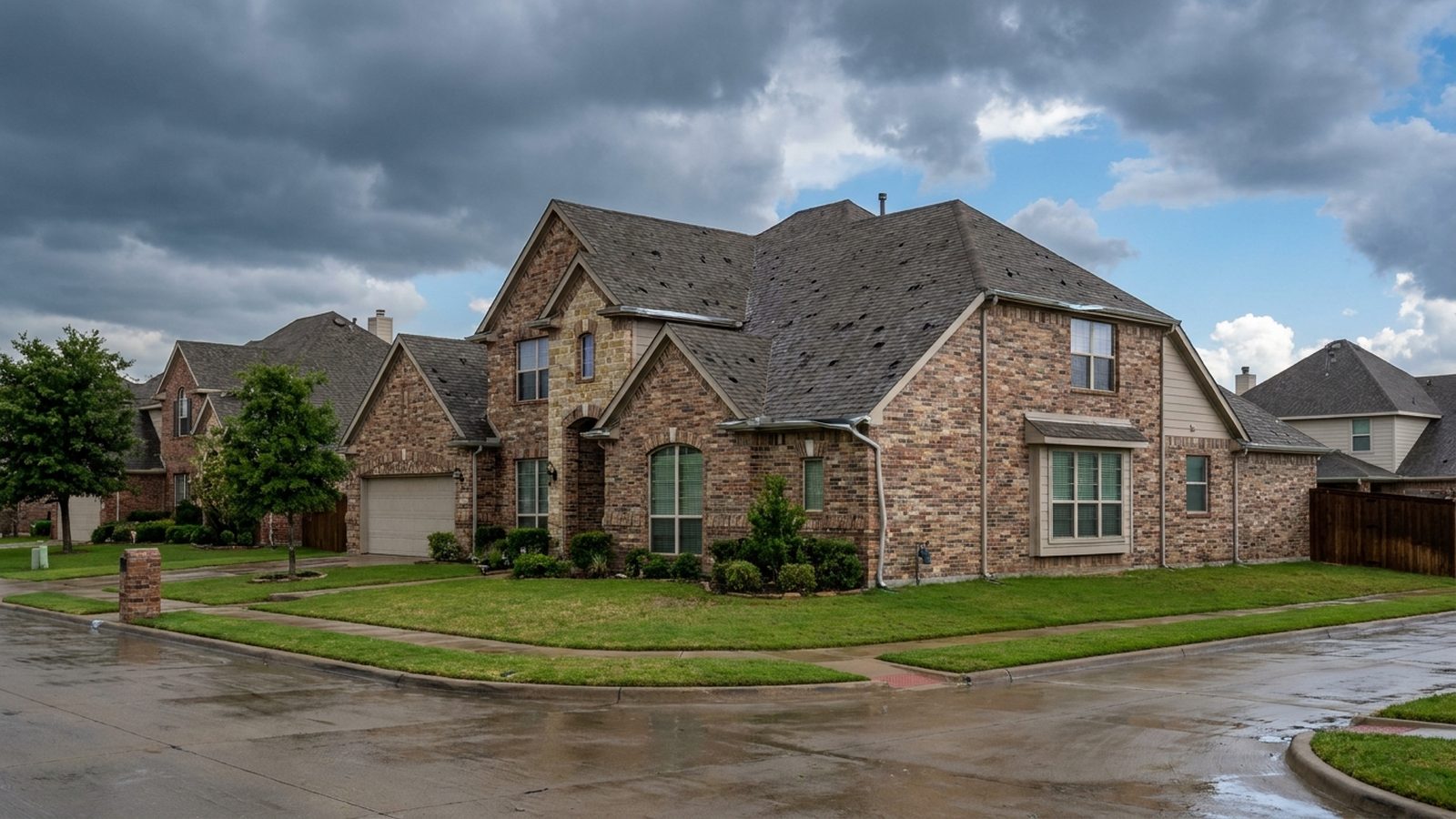
Spring and fall in North Texas often bring severe weather, leaving homeowners to deal with bruised roofs, shattered skylights, and dented siding. If your property recently sustained severe storm damage, you might be wondering whether to endure the lengthy repair process, fight with insurance adjusters, or simply sell the property as-is. Navigating the aftermath of a major weather event is stressful, especially when you are trying to protect your largest financial asset.
This guide is designed for homeowners in Tarrant County who are facing the difficult decision of what to do with a damaged property. We will walk you through evaluating the physical damage, handling complex insurance claims, understanding strict Texas disclosure laws, and deciding on the best path forward for your unique situation. Whether you choose to oversee a full restoration or explore alternative selling methods, having the right information is your best defense.
The Impact of Severe Texas Weather on Fort Worth Homes
Fort Worth residents are no strangers to extreme weather. The region sits in a highly active zone for severe thunderstorms, which frequently produce damaging winds, torrential rain, and large hail. Understanding exactly how these elements interact with your home's exterior is the first step in assessing your property's condition and marketability.
According to the NOAA National Severe Storms Laboratory, hail forms when thunderstorm updrafts are strong enough to carry water droplets well above the freezing level. These ice pellets grow as additional water freezes onto them, eventually falling to the earth at high speeds. When hail strikes a typical Fort Worth home—whether it is a historic bungalow in Fairmount, a mid-century build in Wedgwood, or a newer construction in Keller—the impact can be devastating to asphalt shingles.
Hail damage is not always immediately visible from the ground. The impact of the ice dislodges the protective mineral granules on the surface of the shingles, exposing the underlying asphalt mat to the harsh Texas sun. Over time, this UV exposure causes the shingle to become brittle, crack, and eventually fail, leading to slow, insidious water leaks. In addition to the roof, severe storms can dent aluminum siding, crack vinyl frames, shatter windows, and destroy gutters and downspouts. If heavy rains accompany the hail, the infamous heavy clay soils of Tarrant County can shift, potentially causing foundation issues that compound your property damage.
Navigating Homeowners Insurance Claims in Tarrant County
Once the storm passes and everyone is safe, the immediate next step is dealing with your homeowners insurance company. Navigating a claim can be a complex and frustrating process, especially when thousands of other Fort Worth residents are filing claims at the exact same time.
The Texas Department of Insurance homeowners insurance consumer guide is an excellent resource for understanding your rights and responsibilities. One of the most critical factors in your claim will be determining whether your policy covers Actual Cash Value (ACV) or Replacement Cost Value (RCV). An RCV policy is designed to pay for the cost to replace your damaged roof with a brand new one of similar quality, minus your deductible. An ACV policy, however, factors in depreciation based on the age and condition of the roof before the storm. If you have an older roof in Ridglea Hills and an ACV policy, your insurance payout might be significantly lower than the actual cost of a new roof, leaving you with a massive out-of-pocket expense.
Additionally, Texas homeowners often have specific wind and hail deductibles, which are typically calculated as a percentage of the home's total dwelling coverage rather than a flat dollar amount. Depending on your policy, this deductible can be a substantial financial hurdle.
Texas Disclosure Requirements
Under Texas law, Section 5.008 of the Property Code requires a written Seller's Disclosure Notice for most residential sales, which specifically asks sellers about the roof's condition, past damage, and any previous insurance claims. Source: Texas Property Code Chapter 5
Even if you decide to take the insurance payout and not perform the repairs, you must be entirely transparent with future buyers. Attempting to hide known storm damage is illegal and can lead to severe legal and financial repercussions long after the sale has closed.
Step-by-Step Timeline: Deciding Whether to Repair or Sell As-Is
When you are staring at a damaged home, the path forward can seem murky. Breaking the recovery process down into a step-by-step timeline can help you make a logical, financially sound decision.
Step 1: Secure the Property. Your immediate responsibility is to mitigate further damage. This usually involves hiring a local Fort Worth roofing company to place heavy-duty tarps over compromised areas of the roof or boarding up broken windows. Failing to prevent secondary damage (like interior water intrusion) can give your insurance company grounds to deny portions of your claim.
Step 2: Document Everything Thoroughly. Before any cleanup begins, take extensive photographs and videos of the damage. Capture wide shots of the exterior and close-ups of specific impacts on siding, gutters, and fencing.
Post-Storm Documentation Checklist
- Take time-stamped photos of all exterior damage (roof, siding, windows, AC units).
- Photograph any interior damage, including water stains on ceilings or drywall.
- Gather receipts for any emergency mitigation expenses (tarps, boarding).
- Locate your current homeowners insurance policy documents and declarations page.
- Request a copy of the official police or fire report if the storm resulted in a localized emergency response.
Step 3: Contact Your Insurance Adjuster. File your claim promptly. The adjuster will visit your Fort Worth property to assess the damage and write an estimate. Be prepared for this to take weeks if a major storm has hit the entire Dallas-Fort Worth metroplex.
Step 4: Solicit Contractor Bids. Do not rely solely on the insurance adjuster's estimate. Bring in licensed, reputable, and local general contractors to provide independent quotes for the restoration. Beware of "storm chasers"—out-of-state roofers who flood into Tarrant County after a weather event, demand cash up front, and perform subpar work.
Step 5: Evaluate Your Options. Compare the real-world contractor bids against your insurance payout (minus your deductible). Consider the timeline. If contractors are booked out for months, can you afford the holding costs (mortgage, taxes, utilities) while living in a damaged home? If the numbers do not make sense, or you simply do not have the time and energy to manage a major construction project, selling the property as-is might be the most logical choice.
Get a Cash Offer for Your Fort Worth Home
No repairs, no fees, no hassle. Close in as little as 7 days.
Get My Free Offer →Cost Considerations for Selling a Storm-Damaged Fort Worth House
The financial math of selling a storm-damaged house requires careful calculation. If you choose to repair the home before listing it on the traditional market, your primary costs will be your insurance deductible and any upgrades required to bring older structures up to current Fort Worth building codes. Keep in mind that insurance only restores the home to its pre-storm condition; it does not pay for renovations that buyers might expect in a newly listed home.
While the repairs are ongoing, you will also incur holding costs. Every month that your home sits empty or under construction is another month of property taxes, homeowners insurance premiums, utility bills, and mortgage payments. In a competitive real estate market, these holding costs can quickly eat into your potential equity.
When it comes time to sell, you must also consider the tax implications. Fortunately, the federal government provides significant relief for homeowners selling their primary residence. According to IRS Topic 701, homeowners may exclude up to $250,000 of gain ($500,000 if married filing jointly) on the sale of a main home, provided they meet specific ownership and use tests—generally living in the home for at least two of the last five years. This exclusion applies whether the home is in pristine condition or being sold as-is after a storm.
For those dealing with severe devastation, it is also worth reviewing the IRS rules regarding casualty losses, which can sometimes provide tax relief if your insurance settlement does not cover your total property loss. For more broad guidance on navigating the aftermath of a disaster, you can review our comprehensive guide on Selling a Storm-Damaged Home: Your Complete Recovery Guide.
What to Watch Out For: Buyer Financing and Inspection Hurdles
If you decide to list a storm-damaged home on the traditional market without making repairs, you must prepare for significant hurdles during the escrow process. The biggest obstacle is usually the buyer's financing. Traditional mortgage lenders (such as those backing FHA, VA, or conventional loans) have strict property condition requirements. They require the home to be safe, structurally sound, and habitable.
During the appraisal and inspection period, a heavily damaged roof or compromised siding will be flagged immediately. Lenders will typically refuse to fund the loan until the repairs are completed. Furthermore, the buyer's insurance company will conduct its own evaluation. If the roof has less than a few years of useful life left, or if there is active, unrepaired hail damage, the insurance carrier will likely refuse to bind coverage. Without a bound insurance policy, the lender will not clear the loan to close.
This creates a catch-22 for sellers: you cannot sell the house without fixing it, but you may not have the funds to fix it until you sell. Even if you find a buyer willing to take on the repairs, they will heavily discount their offer to account for the risk and hassle. To understand how these dynamics play out in neighboring markets, you can read our insights on how to Sell My House Fast in Dallas, TX Without Repairs.
Furthermore, as mentioned earlier, the Texas Seller's Disclosure Notice is mandatory. Buyers will see the history of storm damage and insurance claims. This can scare off retail buyers who are looking for a move-in-ready home, leading to extended days on the market and multiple fallen-through contracts.
The Advantages of Selling to Cash Home Buyers in Fort Worth
Given the financing hurdles, repair costs, and emotional stress of dealing with contractors, many Tarrant County homeowners opt for a different route: selling directly to an investor or a professional home buying company. Because these entities purchase properties with private funds rather than traditional bank mortgages, they completely bypass the strict lender requirements and insurance underwriting hurdles that kill traditional sales.
Companies like USHomeBuyers.com specialize in purchasing properties in exactly the condition they are in today. This means you do not need to patch the roof, replace the siding, or even clean out the debris in the yard. By choosing to work with cash home buyers in Fort Worth, you can often close in a matter of days or weeks, rather than waiting months for contractors to finish their work.
A cash sale allows you to step away from the uncertainty of the insurance claims process. You can take whatever insurance payout you are entitled to (if you choose to keep the claim) and sell the physical property as-is, moving on to your next chapter without the burden of a damaged house. We have helped homeowners across the country navigate similar situations, such as those detailed in our guide to Selling a House With Roof Damage in Tampa, FL.
While a cash offer will typically be lower than the pristine, post-repair retail value of the home, it eliminates the out-of-pocket repair costs, real estate agent commissions, closing costs, and ongoing holding expenses. For many homeowners, the speed, certainty, and convenience of a cash transaction far outweigh the stress of a major construction project.
Conclusion
Dealing with hail and storm damage to your Fort Worth home is a daunting challenge, but you are not without options. Whether you choose to navigate the insurance maze and restore your property, or decide that selling as-is is the best way to protect your peace of mind and financial stability, understanding the local market and legal requirements is crucial. If you are tired of dealing with adjusters and contractors and want to explore a faster, simpler solution, you can request a no-obligation cash offer to see what your home is worth today.
This article is general information, not legal, tax or financial advice. Rules change, so confirm details with a licensed professional in Texas.
Frequently Asked Questions
Can I sell my Fort Worth house with an active insurance claim?
Yes, you can sell a house with an active claim. You generally have two options: use the insurance payout to complete the repairs before closing, or sell the property as-is. If selling as-is, you may sometimes be able to assign the claim to the buyer, though this requires approval from your insurance carrier.
Do I have to disclose past hail damage if I already fixed the roof?
Yes. Texas law requires sellers to disclose previous structural damage and past insurance claims on the Seller's Disclosure Notice, even if the damage has been fully repaired. Failing to disclose past storm damage can lead to serious legal consequences and jeopardize the sale.
Will a damaged roof prevent a buyer from getting a mortgage?
It is highly likely. Traditional mortgage lenders require a property to be habitable and insurable. If a roof has severe hail or wind damage, the buyer's insurance company may refuse to issue a policy, which in turn causes the lender to deny the mortgage application.
Is it better to repair my storm-damaged house or sell it for cash?
The best choice depends on your timeline, finances, and insurance coverage. If you have a high deductible or an Actual Cash Value policy that won't cover full replacement, selling to a cash buyer allows you to walk away without out-of-pocket repair costs or managing contractors.
Sources & Further Reading
- IRS Topic 701: Sale of your home
- Texas Property Code Chapter 5 (includes Sec. 5.008, seller's disclosure notice)
- Texas Department of Insurance: homeowners insurance consumer guide
- NOAA National Severe Storms Laboratory: Hail
- Texas Real Estate Commission (TREC)